
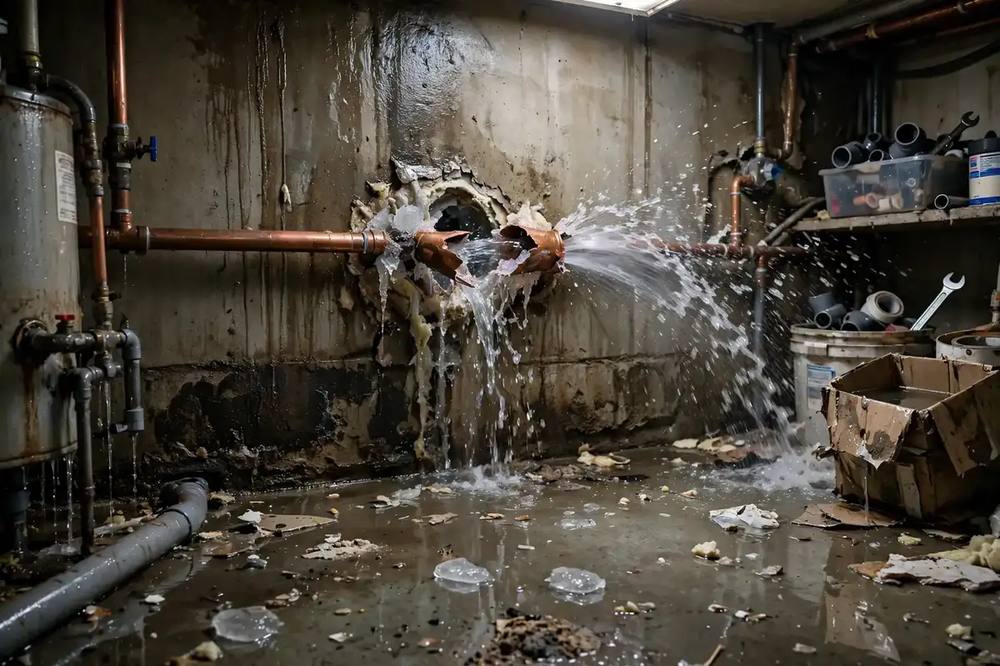
Burst Pipe Cleanup
Fast extraction and drying when a pipe bursts in an attic, a wall, or under a slab.
Learn more about burst pipe cleanup in Rockwall, TX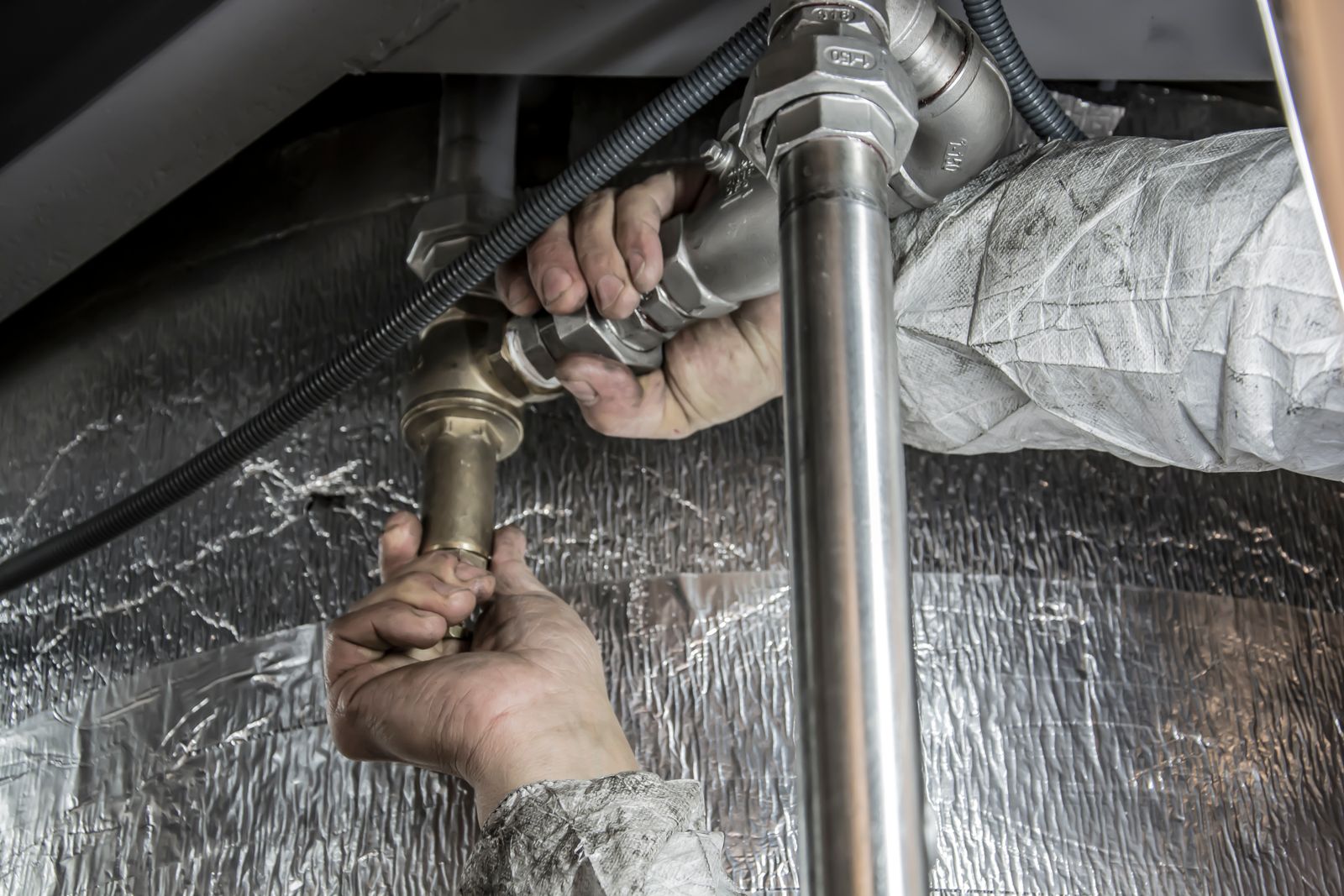
A slab leak hides under the floor. The signs are a bill that jumps, a warm spot, and water running when nothing is on.
One call connects you with a local provider serving Rockwall, Rowlett, Fate, and Heath.
A slab leak does not announce itself with standing water. It runs under the concrete floor, out of sight, while the signs show up in other places: a water bill that jumps with no change in use, the sound of running water when every faucet is off, a warm spot on the floor where a hot line is leaking, damp flooring, or a crack in the floor or wall. In Rockwall, slab leaks are a clay problem as much as a pipe problem. Most North Texas homes built after 1970 sit on a slab foundation, and the ground under them moves with the seasons. When you call (945) 422-7610, you connect with a local provider who can talk through the signs and what to check first. Calls are answered any time, day or night.
Updated: November 2026
Rockwall sits on Blackland Prairie clay, montmorillonite clay that can swell up to 30% when wet. That is the ground truth behind most slab leaks here. The soil moves through a seasonal cycle: drought shrink in August and September, swell in the fall storms, freeze in winter, saturation in spring. The active zone, the upper 5 to 15 feet of soil that moves with moisture, is where the pipes live. Every cycle works on the lines buried in the slab.
A slab leak comes in two kinds. A supply-side leak is a copper pinhole leak on a pressurised line, and it runs continuously, which is why the meter keeps moving and the bill climbs. A drain-side leak is intermittent: cast iron in older homes, PVC in newer ones, and it shows when water runs through the drain. Either way, the water spreads sideways under the flooring and through the walls before it shows on the surface.
Rockwall has two housing stocks, and both get slab leaks. The 1970s and 1980s homes near the lake have older lines that have been through decades of soil movement. The new construction in Fate, Royse City, and north Rockwall from the last ten years has newer lines, but the same clay underneath. Poor drainage is the number one controllable cause of foundation damage here, and a yard that holds water against the slab makes the cycle worse.

The signs are small, and they are easy to explain away one at a time. Together, they point under the floor. A warm spot, a musty smell, or peeling paint can be the first sign of a hidden leak — see the 5 signs of hidden water damage in Rockwall homes.
The meter test settles it. Turn off every tap and appliance, including the washing machine and the ice maker, then look at the water meter. If it is still moving, water is going somewhere it should not. Write down the reading, wait an hour with everything still off, and check it again. A reading that moved means a leak. Do not wait to see if it gets better. A slab leak runs under the floor, and the water keeps spreading until it is found.
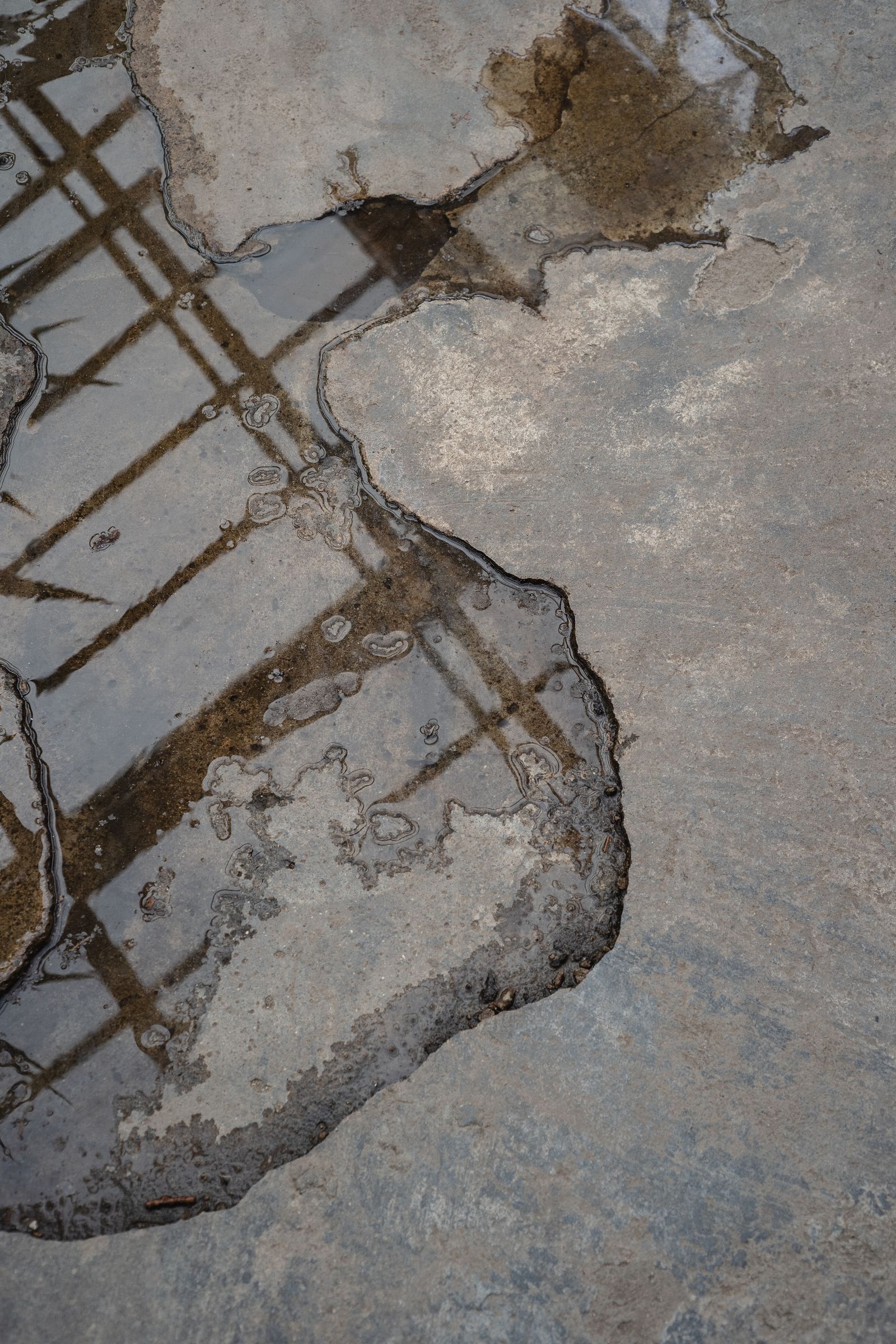
A pressure test comes first. It confirms there is a leak and shows whether it is on the supply side or the drain side, which decides what happens next. Then the leak is pinpointed. Listening equipment picks up the sound of water escaping under the slab, and a thermal camera can show the warm patch where hot water is leaking. On some jobs a moisture meter maps how far the water has spread through the flooring and walls.
The point of pinpointing is to keep the repair small. Nobody should open up a floor on a guess. Once the exact spot is known, the repair can be planned: a spot repair on the line, a reroute around the slab, or, in some cases, a full repipe. That choice belongs to the plumber and the homeowner, and a provider can explain what each one usually involves when you call. What matters for the drying is that the leak is found first, because drying a floor while water is still running under it does not work.
A drain-side leak is the harder one to catch, because it only shows when water runs through the drain. A supply-side leak runs all the time, so the meter keeps moving and the bill climbs. A drain-side leak waits for a shower, a toilet flush, or a washing machine cycle, then sends water under the slab and stops again. The floor may feel damp in the morning and dry by the afternoon, which makes it easy to dismiss.
The pipe material usually depends on the age of the home: cast iron in older homes, PVC in newer ones. Either can crack as the clay shifts. The signs point to the bathroom or the laundry: a damp patch on the floor near a toilet or tub, a musty smell that comes and goes, water appearing after a shower, or a floor that feels soft near a drain. If the supply-side pressure test holds and the meter stays still with everything off, the leak often sits on the drain side. A provider can explain what that means for the repair and the drying when you call.
Once the leak is found and the water is stopped, the drying starts. Standing water comes out first, then air movers and dehumidifiers dry the structure, not just the surface. A concrete slab can usually be dried and kept, though it takes a week or more. Wood subflooring that soaked up water often has to come out, because it cannot be dried and cleaned reliably once it is saturated. Once the leak is fixed, the wet materials have to be put right — see water damage repair in Rockwall TX.
Drying is checked with moisture readings, not with a calendar. Professional structural drying usually takes 3 to 7 days, hardwood floors 7 to 10 days, and a concrete slab a week or more. The provider reads the walls, floors, and subfloor as the work goes on, and compares the numbers with dry areas of the same home. Do not turn the equipment off early because of the noise, and do not decide the room is dry because the surface feels dry.
Mold starts 24 to 48 hours after water damage, so speed matters. If the leak ran for days before anyone noticed, the wall and floor materials may already need to come out. A provider can explain what has to go and what can stay, room by room.
The clay is under the whole city, so slab leaks are not a one-neighborhood problem. Lakefront homes in Chandlers Landing and The Shores deal with lake humidity on top of the clay, which keeps the soil wet longer. Newer builds in Breezy Hill and Stone Creek sit on the same expansive clay, and a yard that holds water against the slab makes the cycle worse. Older homes near Downtown Rockwall have lines that have been through decades of seasonal movement. Homes in Heath, on the east shore of the lake, share the same soil and the same pattern.
Wherever the home is, the signs are the same: the bill, the sound, the warm spot, the meter. If you live in Rockwall, Rowlett, Fate, or Heath and the signs are there, call (945) 422-7610 and describe what you found. A local provider can talk through the meter test and what to check next.
Calling is simple, and you talk to a real person who connects you with a local provider serving Rockwall. Here is how it usually goes, from the first call to the start of drying.
Call (945) 422-7610. Tell us where the water is, how long it has been there, and if power or sewage is involved.
A local provider checks the signs, uses a pressure test and listening equipment to pinpoint the leak under the slab, and takes moisture readings to map how far the water spread.
Standing water comes out with pumps and extractors. Wet padding and damaged drywall are flagged for removal.
Air movers and dehumidifiers dry the structure, not just the surface. Readings are taken until wood and drywall test dry.
Surfaces are cleaned and treated so mold does not start. Then repair can begin.
Other help a local provider can connect you with.
Fast extraction and drying when a pipe bursts in an attic, a wall, or under a slab.
Learn more about burst pipe cleanup in Rockwall, TX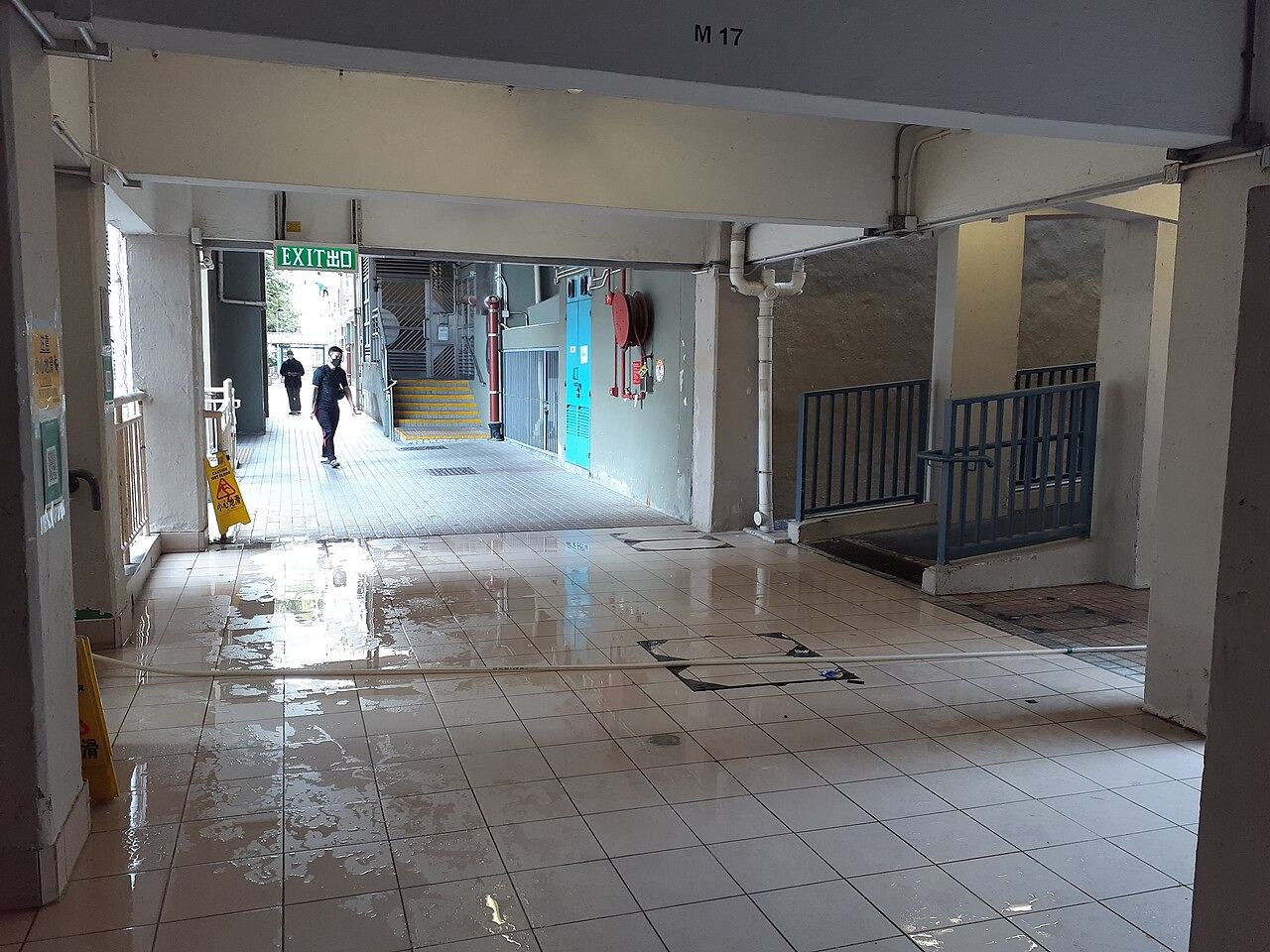
Pumps and extractors that remove standing water fast, before it soaks deeper into floors and walls.
Learn more about water extraction in Rockwall, TX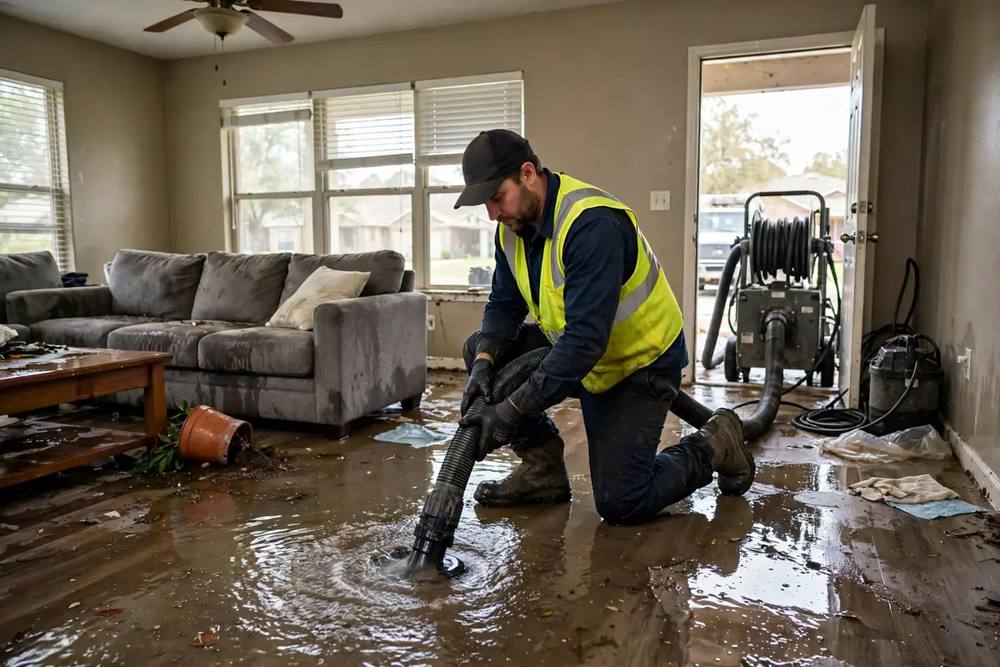
Deep drying of walls, subfloors, and framing so moisture does not stay trapped inside the structure.
Learn more about structural drying in Rockwall, TXIf your water bill jumped, if you hear running water with nothing on, or if there is a warm spot on the floor, call (945) 422-7610 any time, day or night, and connect with a local provider who can talk through the meter test and what happens next. A slab leak does not fix itself, and the water under the floor will not wait.
One call connects you with a local provider serving Rockwall, Rowlett, Fate, and Heath. Tell the provider where the water is and what happened, and they take it from there.
Call (945) 422-7610Watch for the signs: a water bill that jumps with no change in use, the sound of running water when every faucet is off, a warm spot on the floor, damp flooring, or cracks in the floor or wall. The meter test settles it: turn off every tap and appliance, then check the meter. If it is still moving, water is going somewhere it should not. Call (945) 422-7610 and describe what you found.
The ground. Rockwall sits on Blackland Prairie clay, montmorillonite clay that can swell up to 30% when wet, and the soil moves with the seasons: drought shrink in August and September, swell in the fall storms, freeze in winter, saturation in spring. Most North Texas homes built after 1970 sit on a slab foundation, so the pipes run through concrete. That movement works on the lines until one gives way.
A pressure test comes first, to confirm there is a leak and whether it is on the supply side or the drain side. Then the leak is pinpointed with listening equipment that picks up the sound of water escaping, and sometimes a thermal camera that shows the warm patch where hot water is leaking. The point is to find the exact spot before any floor comes up, so the repair is small and the drying is measured.
A concrete slab can usually be dried and kept, though it takes a week or more. Wood subflooring that soaked up flood water often has to come out. A provider reads the subfloor with a moisture meter and explains what can stay and what has to go, room by room.
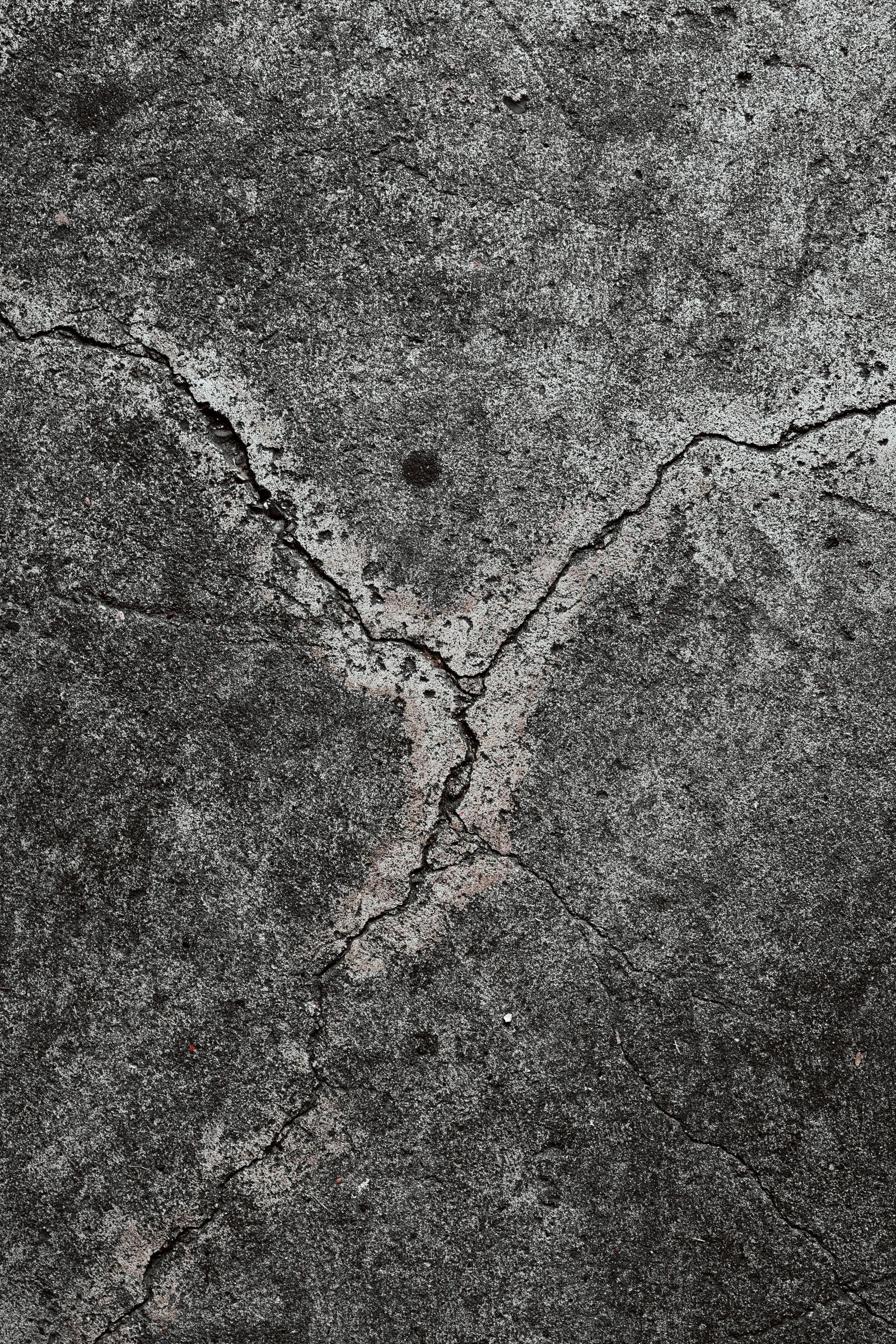
A hairline crack in a slab is common and does not always mean trouble. What matters is whether water is getting in through it, whether it is growing, and whether the floor above it is damp or buckling. A crack with water, a warm spot, or a bill that keeps climbing points to a leak underneath rather than the crack itself. If you are not sure, call (945) 422-7610 and describe what you see.
Turn off every tap and appliance, then check the water meter. If it is moving with everything off, turn off the main valve and call (945) 422-7610. Do not wait to see if it gets better. A slab leak runs under the floor, out of sight, and the water keeps spreading through the walls and flooring until it is found. Take photos of any damp spots, warm patches, or cracks before the provider arrives.
If your bill jumped, if you hear running water when nothing is on, or if there is a warm spot on the floor, call now. A slab leak does not wait, and neither should you.
Call (945) 422-7610Calls answered any time, day or night — including nights, weekends, and holidays.