
How much does water damage cost in Rockwall? It is the first question almost every homeowner asks, and it is also the one no honest website can answer with a single figure. Two homes on the same street, with leaks that look identical from the doorway, can need very different work. The difference is in what the water touched, how far it spread, and how long it sat before anyone found it. This page explains what affects the work involved, in plain terms, so you know what questions to ask and what a provider will want to see. It does not give figures, because figures without seeing the home would be guesswork. If you want to talk through your own situation, call (945) 422-7610 any time, day or night, and describe what happened to a local provider. That conversation is the right place to get a picture of what your home needs.
Updated: November 2026
Why There Is No Single Answer
Water damage is not one job. It is a range of jobs that share a name. A small leak under a kitchen sink that was found quickly is a very different job from a water heater that let go while the house was empty for a weekend. The first might need extraction and drying in one room. The second might need drying across several rooms, removal of soaked materials, and repair work afterwards. Both are water damage, and both need a provider, but the work involved is not comparable.
That is why a provider needs to see the home before describing what the work will involve. A phone call can narrow it down, and moisture readings can narrow it further, but nobody can describe the job from a street address alone. If a website gives you a figure without asking how many rooms are wet or how long the water sat, that figure is not based on your home. It is based on an average home that does not exist.
How Far the Water Spread
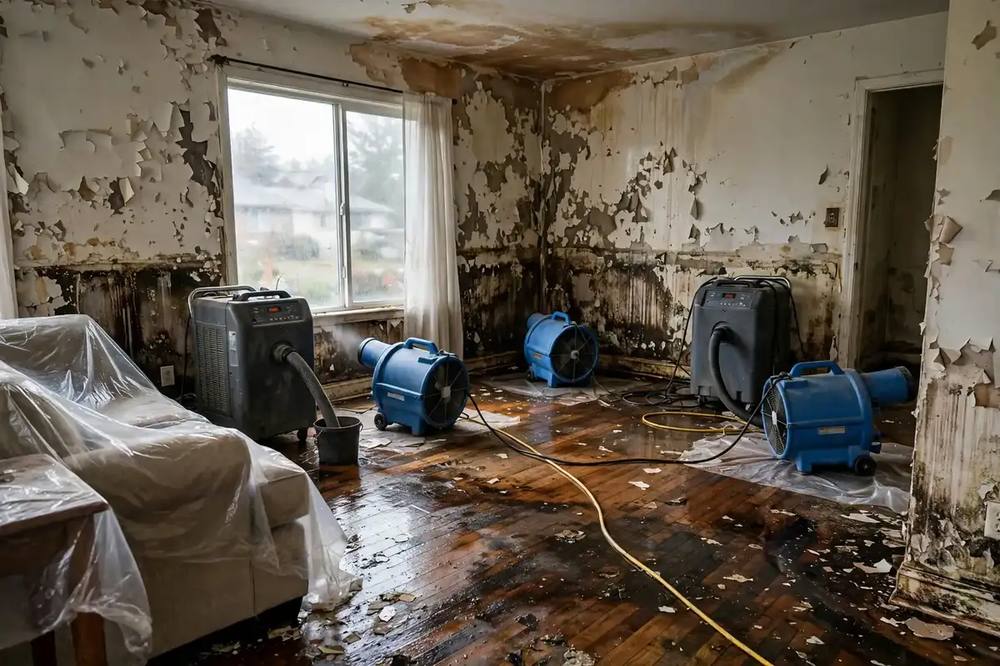
The first thing that shapes the work is how far the water went. A leak that stayed in one room is one kind of job. A leak that spread under the flooring into the next room is another, because water travels sideways under luxury vinyl plank and hardwood where it cannot be seen. A leak upstairs is a third kind again, because the water runs down through the ceiling and into the rooms below, so two floors need attention instead of one.
This is why a provider takes moisture readings in the walls and floors, not just in the room where the water is visible. A floor can look dry while the material underneath is still wet, and a wall can look fine while the drywall inside is soaked. Finding the full extent of the water is part of the job, and it is the step that decides how much drying and repair the home will need.
- One room with a small leak, caught early, involves the least work
- Water that spread under flooring reaches rooms that look dry from above
- Water from an upstairs leak affects the rooms below as well as the room above
- A whole-home event, such as a major pipe failure, touches nearly every part of the house

What Materials Are Wet
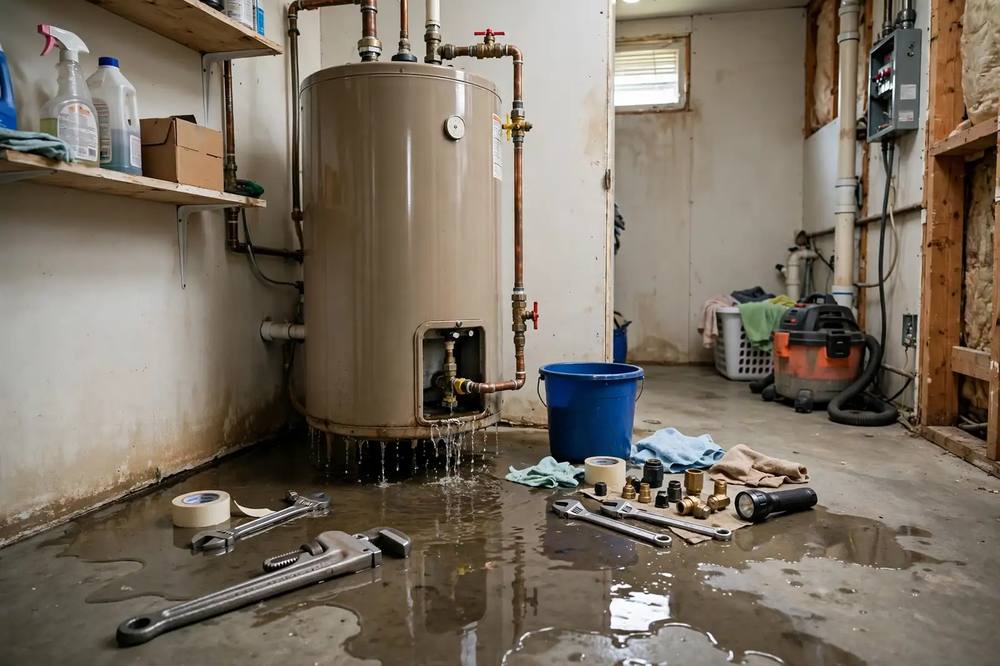
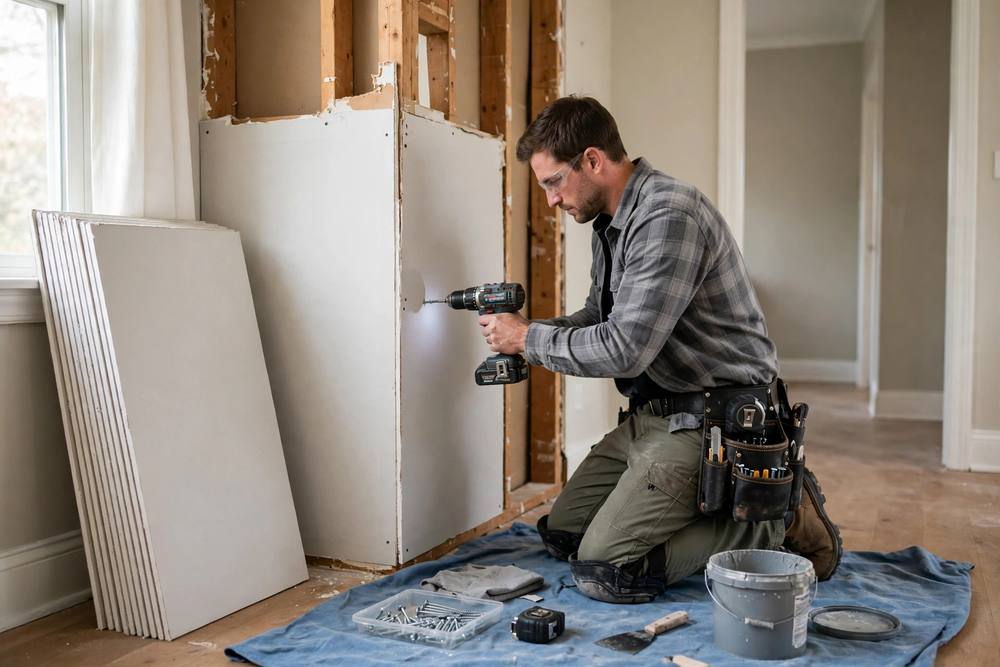
What the water touched matters as much as where it went. Hard surfaces such as tile can often be cleaned and dried. Drywall, insulation and wood flooring are different, because they soak water up and hold it. Once drywall has soaked past the bottom of the wall, it often needs to be cut out so the space behind it can dry. Wet insulation holds water like a sponge, and it usually needs to come out too.
Carpet, cabinets and soft furnishings each behave differently again. Some can be dried and cleaned, and some cannot, depending on what kind of water reached them and how long they sat wet. A provider looks at each material in the home and works out what can be kept, what can be dried, and what needs to be removed. That judgement is part of the visit, and it is why two homes with the same amount of water can need different work.
How Long the Water Sat
Time is the factor most homeowners underestimate. Water that is found and removed quickly has had little time to soak in. Water that sat for days has soaked into drywall, flooring and the wood underneath, and it has had time to spread further through the home. A slow leak that dripped for weeks before anyone noticed is the worst case, because the materials have been wet for so long that drying alone may not be enough.
This is also where the musty smell comes from. In Rockwall's humidity, damp drywall can develop a musty smell in a day or two, and the longer it stays wet, the harder it is to deal with. Acting quickly does not only limit the damage. It limits the work involved, because a home that is dried early needs less removal and less repair than a home that sat wet for a week. If you are unsure whether a leak is old or new, tell the provider when you first noticed it. That history helps.
What a Phone Call Can Tell You
A phone call cannot give you a figure, but it can give you something more useful: a clear picture of what happens next. When you call (945) 422-7610, describe where the water is, how many rooms are wet, and whether you know where it came from. The provider can explain what the visit will involve, what the drying looks like, and what you should do while you wait. You can also ask what records to keep and what your insurer is likely to ask for, so you are ready for that conversation too.
If your policy covers the loss, ask your adjuster what the policy covers, what your deductible is, and whether drying is covered as well as repair. Get the answers in writing. A provider can talk through the questions that usually come up on water damage claims in Rockwall, and can explain what the work involves in plain language, so you know what you are agreeing to before anything starts.
- Describe where the water is, how many rooms are wet, and whether the source is stopped
- Ask what the provider will look at during the visit, and what the drying involves
- Ask what records to keep, and what your insurer is likely to ask for
- Ask what to do while you wait, such as shutting off water or power to wet rooms

If you want to understand what the work might involve for your home, call (945) 422-7610 any time, day or night, and talk it through with a local provider. Describe what happened, ask what affects the work involved, and get a clear picture before anything starts.
Frequently Asked Questions
How fast should I act?
Acting quickly is the one thing that most directly shapes the work involved. Water that is found early has had little time to spread, so fewer rooms and fewer materials are affected. Water that sits spreads further, and the work grows with it. Stop the source if you can do it safely, then call (945) 422-7610.
What if I don't know the source?
Finding the source is part of the visit. A provider takes moisture readings in the walls and floors, which show where the water has reached and usually point back to where it came from. Describe what you see when you call, and the provider can talk through what the visit will involve.
Will insurance cover it?
Many sudden leaks are typically covered, but the answer for your home depends on your policy and on what caused the water. Ask your insurer what is covered, what your deductible is, and whether drying is covered as well as repair. Keep photos and receipts, and ask for the answers in writing.
How long does drying take?
Drying time is part of what shapes the work, and it depends on how far the water spread, what materials are wet, and how long the water sat. A provider measures moisture as the work goes on, so the drying is checked with readings rather than guessed from how the room looks.
Do I need to leave my home?
It depends on the water and the rooms involved. For a small clean-water leak, most families stay. For sewage, or for a large area that needs extensive drying and removal, staying out of the affected rooms is usually best. A provider who has seen the home can advise you.
Why can't a website give me an exact figure for my home?
Because no two homes are the same. The work depends on how far the water spread, what it touched, what kind of water it was, and how long it sat before it was found. A provider needs to see the home and take moisture readings before anyone can describe what the work will involve for your particular situation.