
This is the question every Rockwall homeowner asks after a leak: will insurance pay for this? The honest answer is that it depends on what caused the water, and how fast you acted. A burst pipe and a slow drip that ran for months are not the same loss in the eyes of an insurer, even though both leave your home wet. This guide explains what Texas homeowners policies usually cover, what they usually do not, and what to do in the first hour to protect your claim. It is general information, not advice about your policy. Only your insurer can give you a written answer for your policy. This site connects callers in Rockwall, Heath, Fate and Rowlett with local providers for extraction and drying. Call (945) 422-7610 any time, day or night.
Updated: November 2026
What Is Usually Covered in Texas
Most standard Texas homeowners policies typically cover sudden and accidental water damage. That means a burst pipe, a water heater that lets go, a washing machine hose that bursts, or a dishwasher line that fails overnight. The key word is sudden. The loss happened at a point in time, you did not expect it, and you acted on it as soon as you knew.
If the leak was sudden, you acted fast, and you can show photos and receipts, your claim is in a much stronger position. Keep everything: photos of every wet room, the plumber's bill, drying receipts, and any messages with your provider. Take the photos before you move anything, and keep a list of damaged items room by room. That record is what your adjuster will work from, and a complete record is worth more than a good memory weeks later.
What Is Usually Not Covered
Three things catch people out. The first is flooding from outside. Rising water from a storm or from Lake Ray Hubbard usually needs a separate flood policy. A standard homeowners policy often excludes it, even when the storm was severe. If you live near the lake, check your flood coverage separately, and do not assume it is part of your homeowners policy.
The second is a long-term leak. A leak that dripped for months and was ignored is often seen as maintenance, not an accident, and maintenance is not what a homeowners policy is for. The third is sewage. Many policies exclude sewage backups unless you added that endorsement. Read your policy, or ask your insurer directly, and get the answer in writing. If you are unsure what your policy says, ask. That question costs nothing, and the answer shapes everything you do next.
- Flooding from outside: rising water from a storm or from Lake Ray Hubbard usually needs a separate flood policy
- Long-term leaks: a leak that dripped for months and was ignored is often seen as maintenance, not an accident
- Sewage backups: many policies exclude sewage unless you added that endorsement to your policy
- Damage that happened because drying was put off, which can be seen as a failure to limit the loss
What to Do in the First Hour to Protect Your Claim
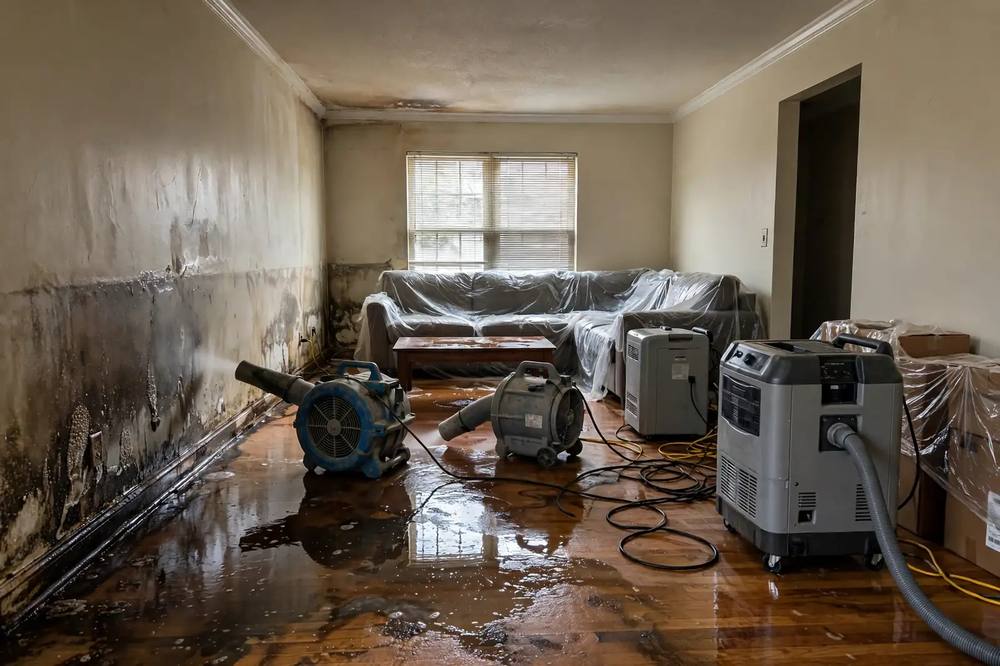
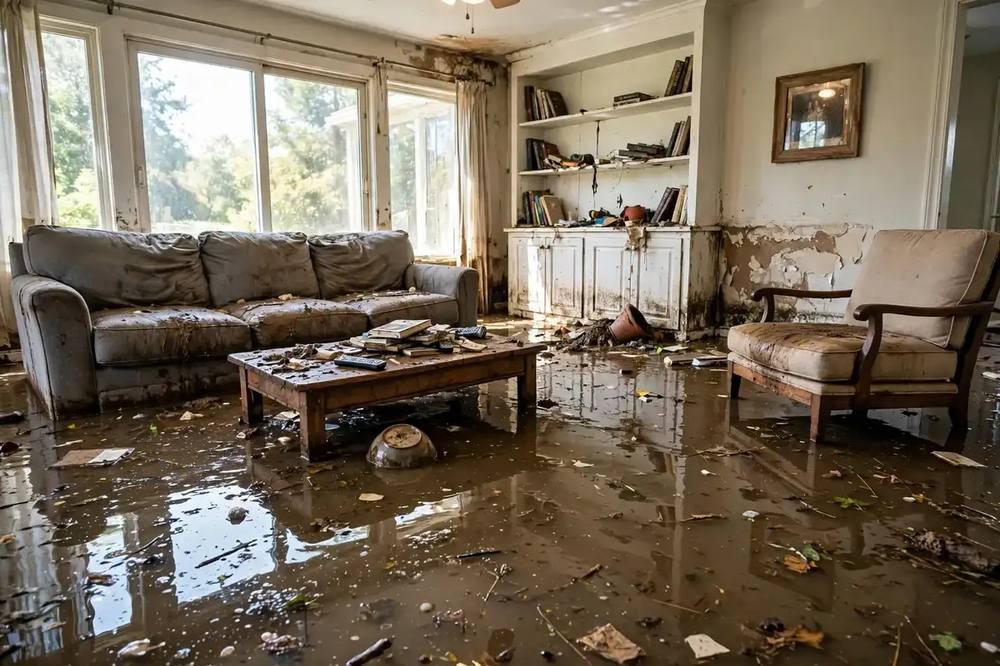
The first hour after you find water matters more than most people realise. Stop the source if you can do it safely. Turn off the main valve for a burst pipe, or the shut-off valve behind a toilet or a sink. Then take photos and video before you move anything. Photograph every wet room, the ceilings, and the insides of cabinets. That record is the foundation of your claim.
Then call your insurer and ask for a claim number and what they need from you. Then call (945) 422-7610 to connect with a local provider for extraction and drying. Do not throw away damaged items until your adjuster has seen the photos. Do not wait to dry. Waiting makes the damage worse, and it can hurt your claim as well. We are not insurance adjusters. We connect you with local providers. Always ask your own insurer for a written answer for your policy.
- Stop the source if you can do it safely, such as turning off the main valve for a burst pipe
- Take photos and video before you move anything
- Call your insurer and ask for a claim number and what they need from you
- Call (945) 422-7610 to connect with a local provider for extraction and drying
- Keep receipts for every expense, from the first hour onward
Questions to Ask Your Adjuster
When you speak with your adjuster, ask direct questions and write the answers down. Is this loss covered? What is my deductible? Do I need to get bids before work starts, or can the drying start now? Do you cover drying, or only repair? Is mold remediation covered if the leak caused it? These are the questions that decide what happens next, and the answers are different for every policy.
Get the answers in writing. A phone conversation is easy to misremember, and a written answer protects you later when the work is underway and memories have faded. If the adjuster asks for something you do not have, ask what would work instead. A provider can help you with the drying records, including moisture readings and photos, that adjusters usually ask for. Keep copies of everything you send, and keep a note of who you spoke to and when.
- Is this loss covered under my policy?
- What is my deductible?
- Do I need to get bids, or can the work start now?
- Do you cover drying, or only repair?
- Is mold remediation covered if the leak caused it?
Drying Cannot Wait for Paperwork
The hardest advice in this guide is also the most important: do not wait for the adjuster before you dry. Drying cannot wait for paperwork. Water keeps spreading into drywall and flooring while you wait, and damp materials left alone develop a musty smell that is hard to shift later. An insurer expects you to limit the loss, which means acting to stop the damage getting worse, not waiting for permission to start.
That is why the order in the first hour is photos first, then calls, then drying. Take the photos, call your insurer, and then get the water out. If you are in Rockwall, Heath, Fate or Rowlett and you are standing in water right now, call first and ask later. A provider can get the extraction and drying started while the claim is still being opened, and the drying records will be there for your adjuster when they ask for them.

If you are in Rockwall, Heath, Fate or Rowlett and you are standing in water right now, call first and ask later. Call (945) 422-7610 any time, day or night, and connect with a local provider for extraction and drying. Drying cannot wait for paperwork.
Frequently Asked Questions
Does insurance cover a burst pipe in Texas?
Most standard policies typically cover sudden burst pipes, but every policy is different. Document the leak with photos, act fast, keep your receipts, and ask your insurer for a written answer about your particular policy.
Does insurance cover flood water from a storm?
Rising water from outside usually needs a separate flood policy. Standard homeowners policies often exclude it, including water that comes in from a storm or from Lake Ray Hubbard. Check your flood coverage separately.
What if the leak was slow?
Slow, long-term leaks are often excluded as maintenance, because the policy expects a homeowner to notice and fix a leak that has been dripping for months. Sudden leaks that you report quickly are in a stronger position.
Should I wait for the adjuster before drying?
No. Do not wait to dry. Take photos, call your insurer, then start drying. Waiting makes the damage worse, and it can hurt your claim as well as your home.
Does insurance pay for mold after a leak?
Sometimes, if the mold was caused by a covered leak and you acted fast. Ask your adjuster and keep your drying records, including moisture readings and photos, so you can show what was done and when.
What records should I keep for my claim?
Keep photos and video taken before anything was moved, a list of damaged items room by room, and receipts for every expense, including drying, repairs and any night you spent away from home. Keep copies of every message with your insurer and your provider, and ask for the answers to your questions in writing.