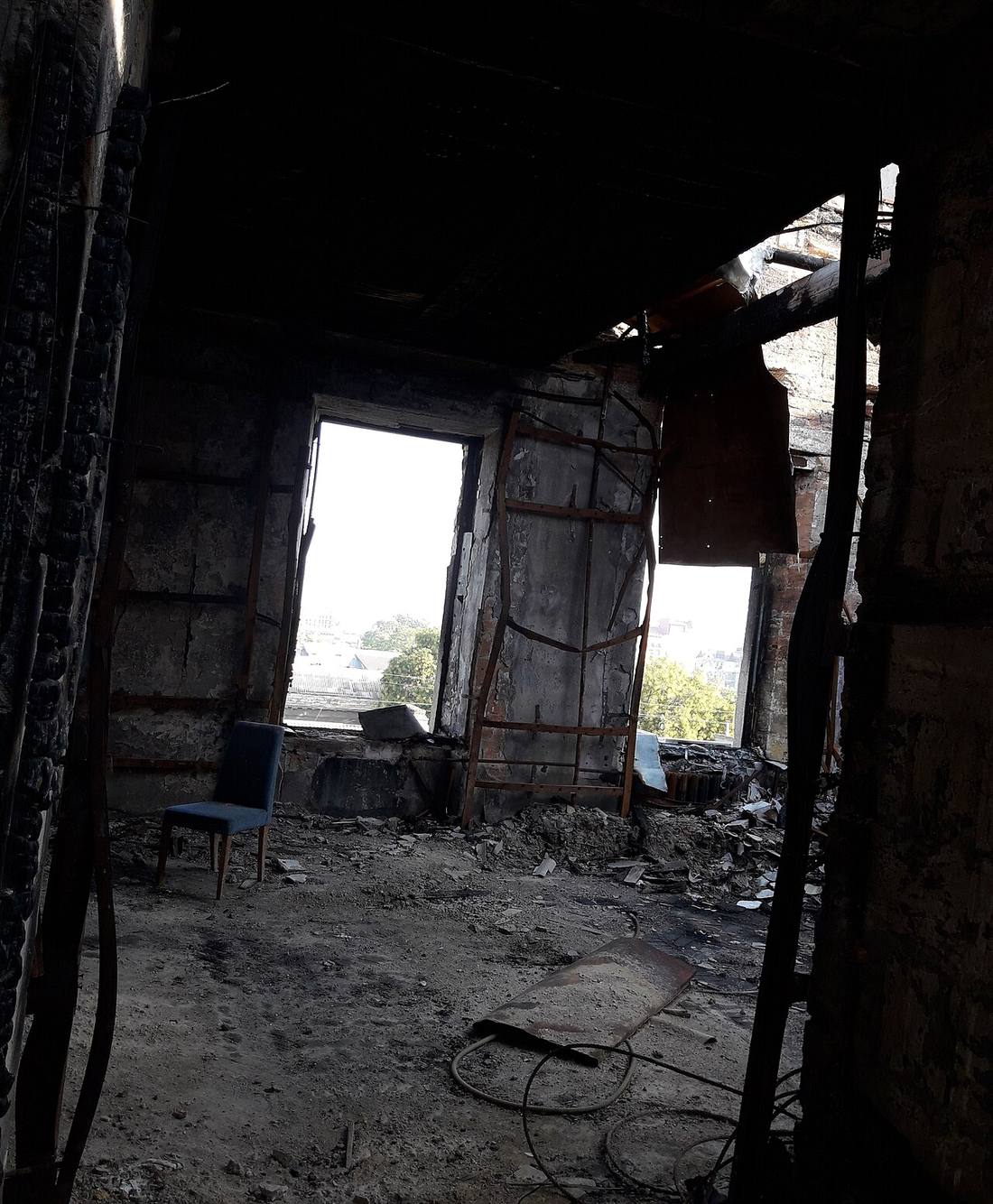
Fire Damage Restoration
Soot cleaning, odor removal, and drying after a kitchen fire, with the water left behind by fire hoses handled at the same time.
Learn more →
A burst pipe does not give much warning.
One call connects you with a local provider serving Rockwall, Rowlett, Fate, and Heath.
A burst pipe does not give much warning. One minute the house is quiet, the next there is water running across the kitchen floor, or a ceiling stain spreading while you watch it. In Rockwall, burst pipes are most often a winter problem, when a cold snap catches a pipe in an attic or an outside wall, but they can happen at any time of year when a fitting fails or a line under pressure gives way. This site connects Rockwall homeowners with local providers who handle burst pipe cleanup, from stopping the water and removing it to drying the home properly. When you call (945) 422-7610, you can describe what is happening, get advice on what to do right now, and connect with a provider serving your neighborhood. Calls are answered any time, day or night.
Updated: November 2026
Rockwall winters are mild most of the time, which is exactly why a cold snap catches so many homes out. Pipes run through attics and outside walls that are never insulated for a hard freeze, because a hard freeze is rare. When the temperature drops sharply overnight, the water inside those pipes can freeze, expand, and split the pipe. The leak often does not show until the ice thaws, which can be hours later, by which time the water has been running for a while.
It is not only the cold. Older fittings can fail under normal pressure, a water heater connection can let go, or a washing machine hose can split after years of use. Slab leaks are another Rockwall pattern: a pipe under the concrete slab develops a leak, and the water spreads through the walls and floors before anyone notices. Whatever the cause, the result is the same. Water moves fast, and the first hour decides how much of the home gets wet.
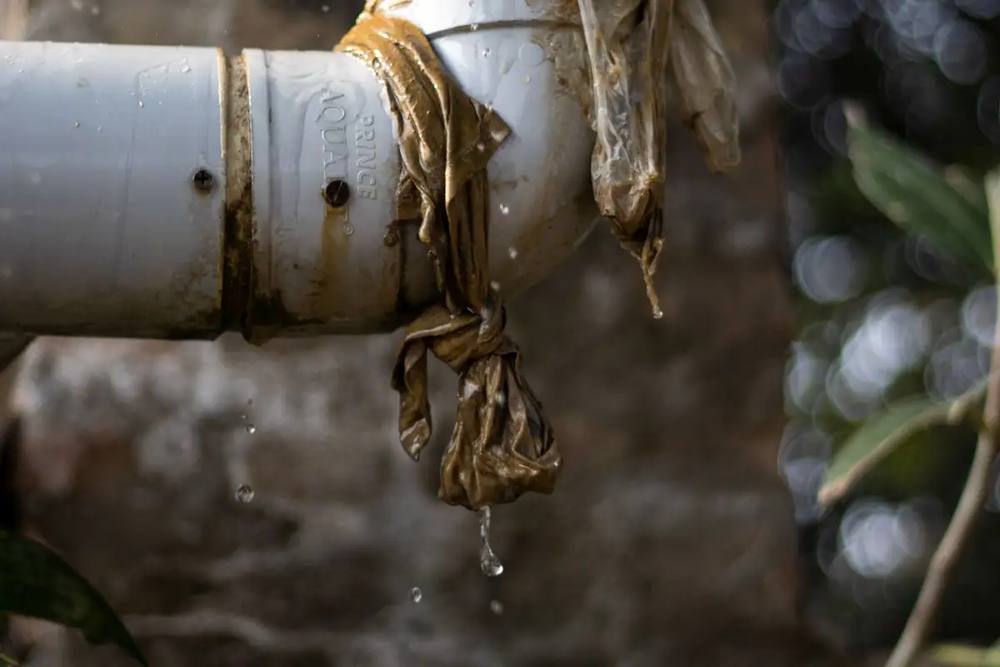
The most useful thing you can do in the first minutes is stop the water. If you know where your main shut-off valve is, turn it off. If you do not know, find it now, before the next emergency, and make sure everyone in the household knows where it is. Once the water is off, turn off the power to any rooms where water is near outlets, switches or light fittings, and do not step into standing water in a room where the power is still on.
Move what you can: rugs, electronics, papers and anything that will be ruined by sitting in water. Lift furniture legs onto blocks or foil if you can, so the wood does not soak. Then take photos and video of every wet room before you start moving things around, because that record matters for your insurer. Do not use a household vacuum on water, and do not try to mop up a large leak by hand. The water is deeper than it looks, and it has already reached places a mop cannot.
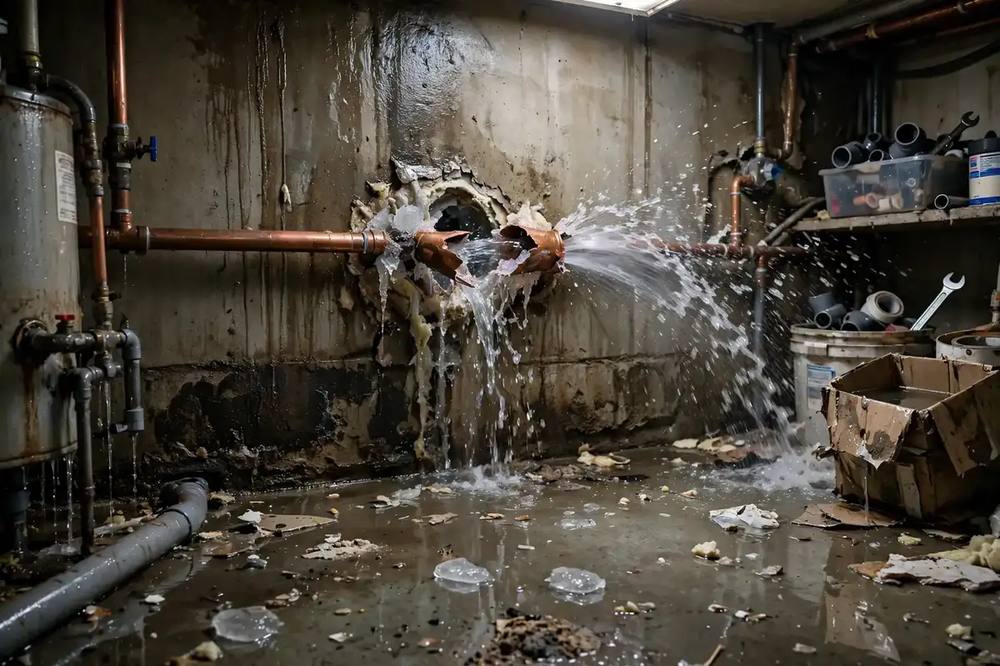
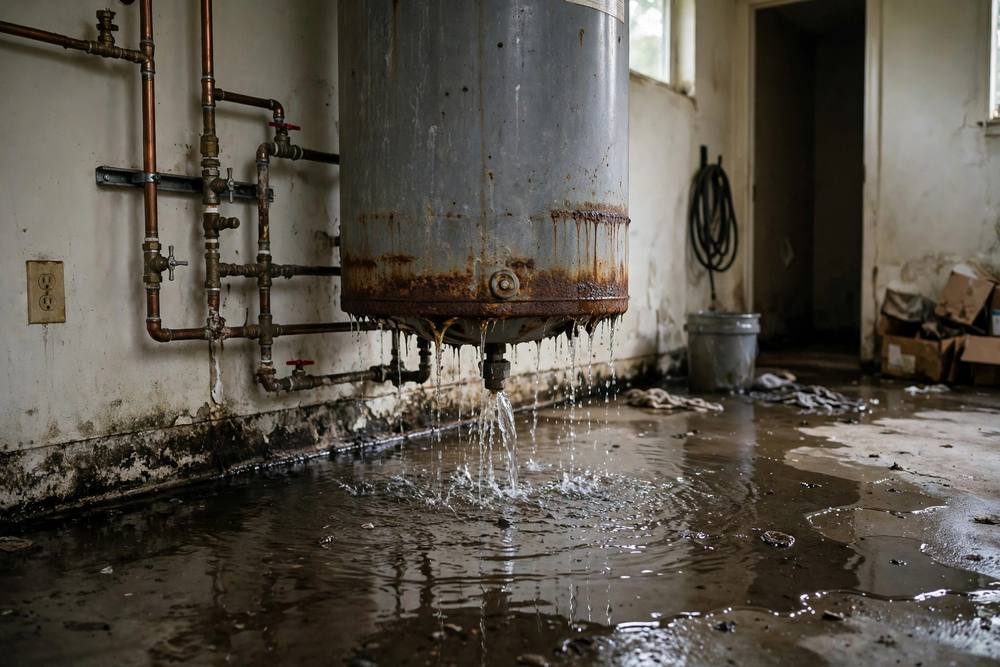
When a provider arrives, the first job is to work out what happened. That means a walkthrough of the wet rooms and the rooms around them, moisture readings in the walls and floors, and a check of the rooms below if the leak was upstairs. Water travels sideways under flooring and down through ceilings, so the wet area is often bigger than it looks from the doorway. A meter reading tells the provider where the water has reached, including inside walls that look dry on the surface.
Then the water comes out. Pumps and extractors remove the standing water, and air movers and dehumidifiers start drying the materials that soaked it up. The provider keeps measuring as the work goes on, because drying is only finished when the wood and drywall test dry against unaffected parts of the home. Surfaces are cleaned and sanitized once the water is out, so the room is left clean as well as dry.
Not all water from a burst pipe is the same, and a provider treats each kind differently. Clean water from a supply pipe is the simplest case, though it still needs to be removed and the home dried properly. Water from a washing machine or a dishwasher is dirtier, because it carries soap and waste, and it needs more careful cleaning. Sewage is a different job entirely, and it needs containment first, so that nothing from the affected area spreads to the rest of the home.
This matters because the cleaning step depends on what was in the water. A provider will ask what the water looks and smells like, and where it came from, before deciding how to handle it. If you are not sure, say so when you call. Stay out of water that smells of sewage, keep children and pets away from it, and do not try to clean it yourself. A provider can talk through what to do while you wait, and what the cleanup will involve once someone is on site.
Getting the standing water out is only the first half of the job. The second half is drying what soaked it up, and that takes longer than most people expect. Drywall, wood flooring and the wood under cabinets all hold water, and they give it up slowly. In Rockwall, the humidity near Lake Ray Hubbard slows things further, because damp air makes it harder for wet materials to dry. That is why a provider uses dehumidifiers as well as air movers, and why the equipment needs to keep running until the readings say the materials are dry.
Do not turn the equipment off early because of the noise, and do not decide the room is dry because the surface feels dry. A moisture meter is the only reliable check, and a provider takes readings in the walls and floors over the course of the drying, comparing them with dry areas of the same home. Once the readings are right, the room can be put back together. If wet drywall or flooring is covered up before it is dry, the damp stays trapped, and the trouble comes back later in a worse form.
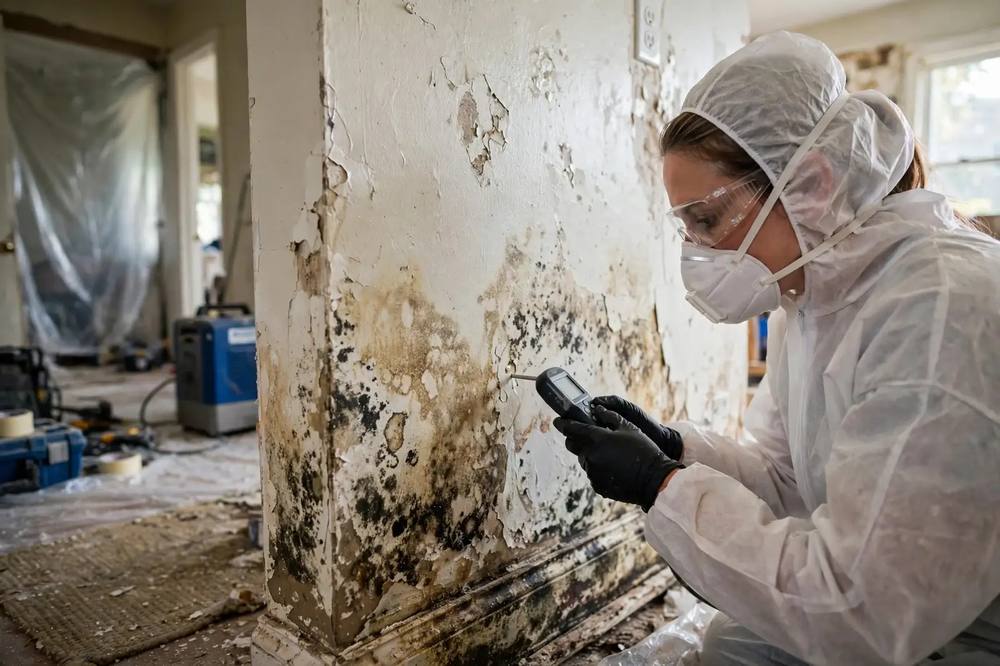

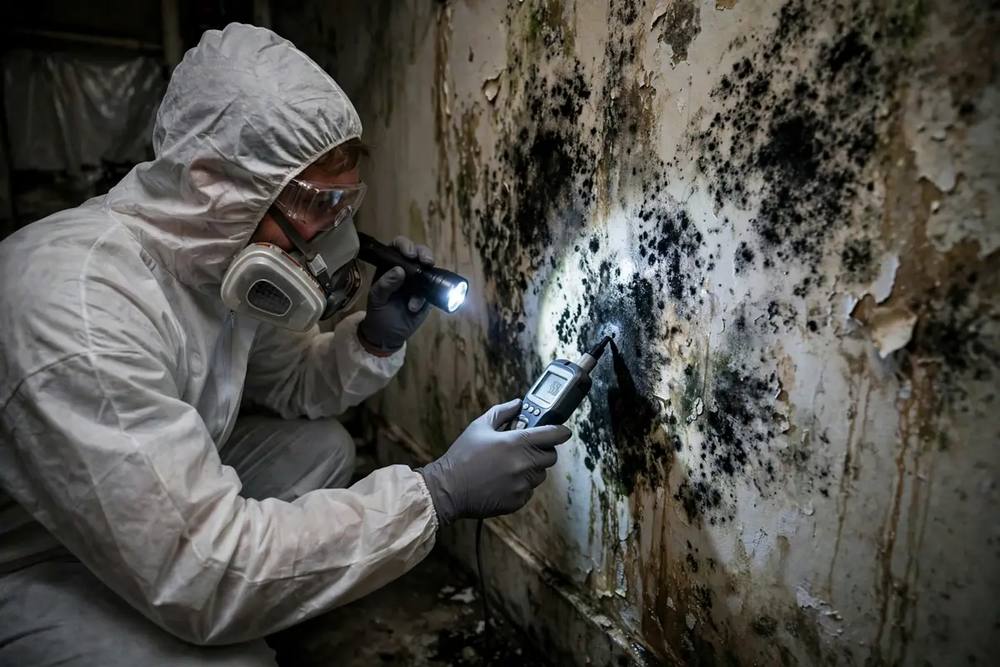
Calling is simple, and you talk to a real person who connects you with a local provider serving Rockwall. Here is how it usually goes, from the first call to the start of drying.
Call (945) 422-7610. Tell us where the water is, how long it has been there, and if power or sewage is involved.
A local provider checks the source and uses a moisture meter to find water behind drywall and under flooring.
Standing water comes out with pumps and extractors. Wet padding and damaged drywall are flagged for removal.
Air movers and dehumidifiers dry the structure, not just the surface. Readings are taken until wood and drywall test dry.
Surfaces are cleaned and treated so mold does not start. Then repair can begin.
Other help a local provider can connect you with.
Soot cleaning, odor removal, and drying after a kitchen fire, with the water left behind by fire hoses handled at the same time.
Learn more →
Containment and cleaning for musty smells and mold after a leak that was not dried in time.
Learn more →
Standing water removal, flood water extraction, and drying after storm or lake water comes inside.
Learn more →If a pipe has burst in your Rockwall home, call (945) 422-7610 any time, day or night, and connect with a local provider who can talk through what to do right now and what happens next. The water will not wait, and neither should the call.
Right away, and before anything else, get the water stopped. A burst pipe keeps running until the main valve is off, so every minute adds water to the floors and walls. Once the valve is off, call (945) 422-7610 and describe where the water is, so a local provider can talk through what to do next.
Listen and look before you call. A hissing sound in a wall, a warm patch on the floor, water pooling at the base of the water heater, or a ceiling stain that is growing all point to the source. Tell the provider what you hear and see, and they can help you trace it and tell you which valve to shut off.
A pipe that bursts suddenly is the kind of loss a standard homeowners policy typically covers, but every policy is different. Take photos of the split pipe and every wet room before anything is moved, keep the plumber's receipt, and ask your adjuster for a written answer about your particular policy.
It depends on where the pipe was. A pipe that burst in the attic sends water down through ceilings, so two floors need drying instead of one. A pipe under the slab spreads water sideways under the flooring. A provider takes moisture readings as the work goes on, so the drying is measured rather than guessed.
It depends on what the water reached. If a ceiling is sagging, or water is near wiring and outlets, stay out of those rooms until a provider has looked at them. For a small supply-line leak in one room, most families stay in the home while the work goes on.
It is usually near where the water line enters the home, often in a garage, a utility closet or outside by the street. If you are not sure where yours is, find it before an emergency, and show everyone in the household. Turning it off is the single most useful thing you can do while you wait for help.
If you see water, smell mustiness, or hear running water when nothing is on, call now. Water damage does not wait, and neither should you.
Call (945) 422-7610Calls answered any time, day or night — including nights, weekends, and holidays.